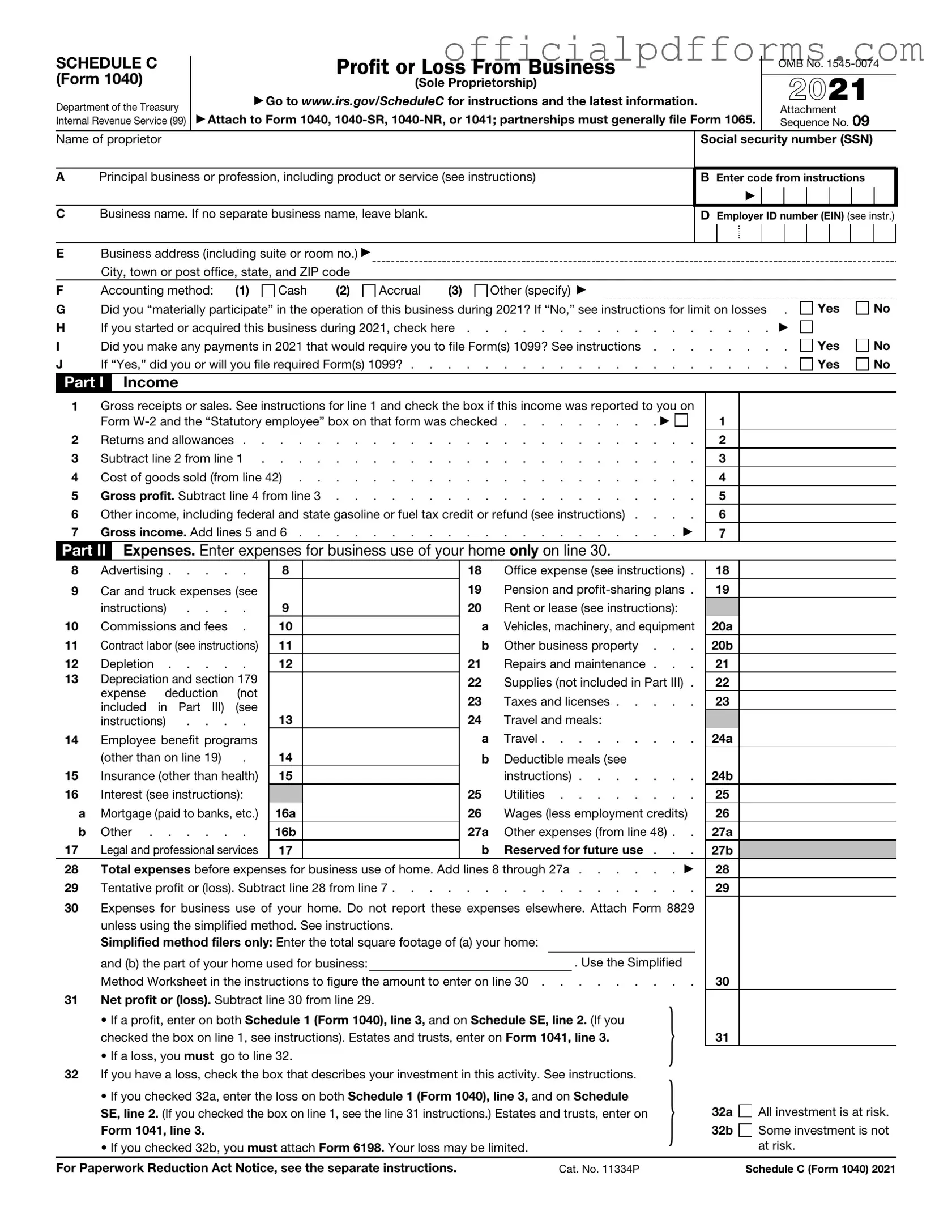
Fill in a Valid IRS Schedule C 1040 Form
Common PDF Forms
Simple Job Application Form - Streamline your job search by filling out this form.
To streamline the employment verification process, employers can utilize the California Employment Verification form, which serves as a crucial tool in confirming an employee's eligibility to work. For convenience, you can access the document here to ensure all necessary information is documented and compliant with regulations.
How to Donate a Car to Family Member in Louisiana - The form is a straightforward method for facilitating the generous act of property transfer in Louisiana.
Misconceptions
The IRS Schedule C form is essential for sole proprietors reporting their business income and expenses. However, several misconceptions surround this form that can lead to confusion. Here are nine common myths:
-
All business owners must file a Schedule C.
Not every business owner needs to file this form. Only sole proprietors or single-member LLCs report income using Schedule C. Partnerships, corporations, and other business structures have different forms.
-
You can’t deduct expenses if you don’t have receipts.
While receipts are crucial for substantiating expenses, you can still claim deductions based on reasonable estimates if you lack documentation. However, having records is always recommended to support your claims in case of an audit.
-
All income needs to be reported on Schedule C.
This is partially true. You must report all income from your business activities, but not all income is necessarily reported on Schedule C. For example, some income may be reported on different forms, depending on the nature of the income.
-
Filing Schedule C guarantees a tax refund.
Filing Schedule C does not automatically result in a refund. Your refund depends on your overall tax situation, including your total income, deductions, and credits.
-
You can only deduct expenses that directly relate to your business.
While direct business expenses are deductible, you can also deduct some indirect expenses, such as a portion of your home office or vehicle expenses, if they are used for business purposes.
-
All income is taxable.
Not all income is taxable. For example, some grants or certain types of loans may not be considered taxable income. It’s essential to understand the nature of your income to determine its taxability.
-
Filing Schedule C is the same as filing a personal tax return.
Filing Schedule C is part of your personal tax return (Form 1040), but it specifically addresses your business income and expenses. It’s essential to complete it accurately to reflect your business activities.
-
You can’t amend a Schedule C once it’s filed.
You can amend your Schedule C if you discover errors or omissions. You would need to file an amended tax return (Form 1040-X) to correct any mistakes.
-
All self-employed individuals must pay self-employment tax.
While most self-employed individuals do pay self-employment tax, there are exceptions. For instance, some may qualify for certain exemptions based on their income level or business structure.
Understanding these misconceptions can help you navigate the complexities of filing your taxes more effectively. Always consider consulting a tax professional for personalized advice.
Documents used along the form
When filing your taxes as a self-employed individual, the IRS Schedule C (Form 1040) is essential. However, several other forms and documents often accompany it to ensure your tax return is complete and accurate. Here’s a brief overview of some commonly used forms.
- IRS Form 1040: This is the standard individual income tax return form. It serves as the main document for reporting your income, deductions, and tax liability.
- IRS Schedule SE: If you are self-employed, this form calculates your self-employment tax. It’s important for determining how much you owe for Social Security and Medicare.
- IRS Form 4562: Use this form to report depreciation and amortization. If you have significant business assets, this form helps you claim deductions for their depreciation over time.
- Power of Attorney form: A crucial document enabling someone to act on your behalf in various matters when you are unable to do so. For more information, visit toptemplates.info.
- IRS Form 8829: This form is used to claim expenses for business use of your home. If you operate your business from home, it can help you deduct a portion of your home expenses.
Having these forms ready when you file your Schedule C can streamline the process and help you maximize your deductions. Always keep your records organized to make tax time easier.
Steps to Filling Out IRS Schedule C 1040
Filling out the IRS Schedule C (Form 1040) is an important step for self-employed individuals reporting income and expenses from their business. This form allows you to detail your earnings and deductions, which ultimately affects your tax liability. Follow these steps to complete the form accurately.
- Gather your documents. Collect all necessary records, including income statements, expense receipts, and any other relevant financial information.
- Start with your basic information. Enter your name, Social Security number, and the name of your business at the top of the form.
- Describe your business. Provide a brief description of the type of business you operate and its principal product or service.
- Report your income. In Part I, list your gross receipts or sales. If you have returns and allowances, subtract those from your gross income.
- Calculate your expenses. In Part II, fill in the expenses related to your business. Common categories include advertising, car and truck expenses, and utilities.
- Determine your net profit or loss. Subtract total expenses from your gross income. This figure will be reported on your Form 1040.
- Sign and date the form. Ensure that you sign and date the Schedule C before submitting it with your tax return.
Once you have completed the form, review it for accuracy. Keep a copy for your records, as you may need it in the future for reference or if the IRS requests additional information.
Common mistakes
-
Not keeping accurate records. Many individuals underestimate the importance of maintaining detailed records of income and expenses. Without proper documentation, it becomes challenging to justify deductions.
-
Mixing personal and business expenses. It’s crucial to separate personal and business finances. Mixing them can lead to confusion and potential issues during an audit.
-
Incorrectly reporting income. Ensure that all income is reported accurately. Failing to include all sources of income can lead to penalties and interest.
-
Overlooking deductible expenses. Many people miss out on valuable deductions. Common overlooked expenses include home office costs, mileage, and business-related meals.
-
Using the wrong accounting method. Choose between cash and accrual accounting methods carefully. Using the wrong method can distort your financial picture.
-
Failing to sign and date the form. It may seem minor, but forgetting to sign and date your Schedule C can delay processing and result in penalties.
-
Not filing on time. Missing the tax deadline can lead to penalties and interest. Staying organized and aware of deadlines is essential.
-
Neglecting to seek professional help. If your situation is complex, consider consulting a tax professional. They can help navigate the intricacies of the form and maximize your deductions.
-
Ignoring state requirements. Each state has its own tax regulations. Make sure to understand and comply with state-specific requirements in addition to federal obligations.
Get Clarifications on IRS Schedule C 1040
What is IRS Schedule C (Form 1040)?
IRS Schedule C is a form used by sole proprietors to report income or loss from their business activities. This form is filed along with the individual’s Form 1040. It provides the IRS with detailed information about your business income, expenses, and net profit or loss. If you operate a business as a sole proprietor, you will need to fill out this form to accurately report your earnings and pay taxes accordingly.
Who needs to file Schedule C?
Any individual who operates a business as a sole proprietor must file Schedule C. This includes freelancers, independent contractors, and small business owners. If your business earned income, even if it was a small amount, you are required to report it. Additionally, if you had expenses related to your business, you can deduct those on this form to reduce your taxable income.
What types of income should be reported on Schedule C?
Schedule C requires you to report various types of income, including:
- Sales of products or services
- Commissions earned
- Fees for services rendered
- Income from partnerships or other business entities
Essentially, any money earned from your business activities should be reported. Keep detailed records of all income sources to ensure accurate reporting.
What expenses can I deduct on Schedule C?
When filling out Schedule C, you can deduct a variety of business-related expenses. Common deductions include:
- Cost of goods sold
- Rent or lease payments for property used in the business
- Utilities and office supplies
- Advertising and marketing costs
- Travel and vehicle expenses related to business activities
- Professional fees (e.g., legal or accounting services)
These deductions can help lower your taxable income, so it’s important to keep receipts and documentation for all expenses claimed.
How do I calculate my net profit or loss on Schedule C?
To calculate your net profit or loss, start by adding all your business income together. Then, subtract your total business expenses from this income. The resulting figure is your net profit or loss. If your expenses exceed your income, you will report a loss, which can be beneficial as it may reduce your overall tax liability.
What happens if I don’t file Schedule C?
Failing to file Schedule C when required can lead to serious consequences. The IRS may impose penalties for not reporting income, which can include fines and interest on unpaid taxes. Additionally, not filing can trigger an audit, which can be time-consuming and stressful. It’s crucial to file the form accurately and on time to avoid these issues.